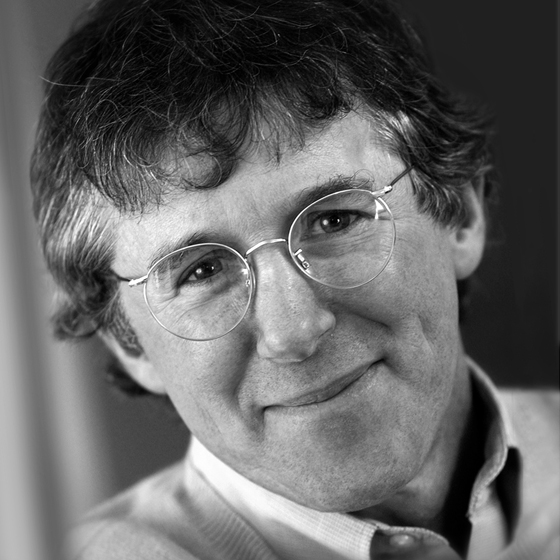
Aaron Lansky
If I had started ten years earlier, I don't think anybody would have cared – there were Yiddish books everywhere. Yiddish was still too present for people to take it seriously. I don't think anybody had a sense yet that we had lost a culture, because we hadn't lost it yet, it was still ‘Big deal, all old people speak Yiddish, what’s the problem here?’ and if I started twenty years later, of course, the books would have been lost, it would have been too late. I consider it the great blessing of my life that the work was there waiting for me.
-
The beginnings: collecting Yiddish books
-
The value of books to the Jewish people
-
On the responsibility of being handed the “historical baton”
-
Lansky responding to the question “What is Yiddish to you?”
-
Outwitting History: The Amazing Adventures of a Man Who Rescued a Million Yiddish Books
Read chapter 5 (“A Ritual of Cultural Transmission”) and chapter 6 (“Don’t You Know That Yiddish Is Dead?”) from Lansky’s fascinating memoir, about which the Boston Globe wrote: “What began as a quixotic journey was also a picaresque romp, a detective story, a profound history lesson, and a poignant evocation of a bygone world.”
(Algonquin Books, 2004) -
“Flip Side” in Pakn Treger (Summer, 2011)
Lansky looks back: in this first-person article in Pakn Treger, the magazine of the National Yiddish Book Center, Lansky considers history of the Book Center, what motivated him, the impact that saving the books has had on scholarship, and plans for the future.
-
A Bridge of Books: The Story of the National Yiddish Book Center
View a short documentary by filmmaker Sam Ball, in which Lansky recounts the origins of the Book Center.
(video, 13:36)
Lansky’s memoir and an audiobook
-
Outwitting History: The Amazing Adventures of a Man Who Rescued a Million Yiddish Books
(Algonquin Books of Chapel Hill, 2004)
“I was 19 when I began studying Yiddish,” Lansky recalls. “Suddenly an entire universe opened up to me. It was like discovering Atlantis, a lost continent, a treasure-trove of Jewish tradition and culture, sensibility, wisdom and passion, all locked up in this amazing modern literature.” In his memoir, he recounts his story—from dropping out of graduate school so he could collect Yiddish books (at the time it was estimated that fewer than seventy thousand existed) to collecting over a million books, establishing a permanent home for the National Yiddish Book Center, and more. -
Audiobook: An Introduction to Modern Yiddish literature
(National Yiddish Book Center, 1996)
Related to Yiddish books
-
National Yiddish Book Center
Lansky is the president of the National Yiddish Book Center, which he founded in 1980. The Center works to rescue Yiddish and other modern Jewish books and make them available to the world. The collection now totals over a million volumes, with the core collection stored in a state-of-the-art repository and thousands of titles available online from the Virtual Yiddish Library.
-
PaknTreger
PaknTreger, a magazine published by the National Yiddish Book Center, features articles about Yiddish culture, the Yiddish language and the people who help maintain these in today’s world. It carries on the tradition of the original pakn tregers, who traveled from shtetl to shtetl in Eastern Europe bringing books and news of the outside world.
Comprehensive interviews with Lansky, resources to facilitate learning about and discussing Yiddish
-
Video interview—Amherst…Neighbor to Neighbor: Aaron Lansky
A June 2011 interview with Lansky after he received an honorary doctorate from Amherst College. Topics discussed include his childhood, his passion for Yiddish, and his work collecting books and creating the National Yiddish Book Center.
(31:15) -
Unquiet Pages
This is the main exhibit of the National Yiddish Book Center. Materials on view include Yiddish novels, plays, poetry, memoirs, and reportage. The comprehensive web treatment includes in-depth discussions on the many topics covered, along with several short videos.
-
Wexler Oral History Project
A project of the National Yiddish Book Center to collect personal stories with a focus on Yiddish language and culture. Listen to/view people’s recorded stories and sign up to tell your own when you visit the Center.
-
“A Time to Build Again,” Pakn Treger, Summer 2007
Interview in which Lansky discusses next steps for the National Yiddish Book Center including the launching of the new educational center. As he explains, “Now that the books are largely safe, the next obvious step is: ‘So how do you open up these books and share their contents with the world?’ Because bound up inside this literature is essentially 1,000 years of Jewish experience as well as the Jews’ first sustained literary encounter with the modern world. Very simply, if we want to know who we are, we need to find out what lies within the books.